

How 3D Visualization Brings Golf Course Designs to Life
Golf course design is a meticulous art form—an intricate balance of aesthetics, functionality, and environmental sustainability. Every fairway curve, bunker placement, and green elevation must harmonize with the landscape while delivering an exceptional playing experience. But before the first blade of grass is planted or the first shovelful of earth is moved, there’s an essential phase that brings visions to reality: 3D visualization.
The Evolution of Golf Course Design: From 2D Rendering to Digital 3D Models
Traditionally, golf course architects relied on hand-drawn blueprints, topographic maps, and 2D renderings to communicate their designs. While these methods have served the industry for decades, they have limitations. They lack depth, realism, and the ability to fully convey spatial relationships—crucial elements when designing a world-class golf course.
Enter 3D visualization: a transformative tool that has reshaped how golf courses are designed, presented, and executed. With cutting-edge CGI and advanced rendering techniques, designers can create lifelike representations of a course long before construction begins.
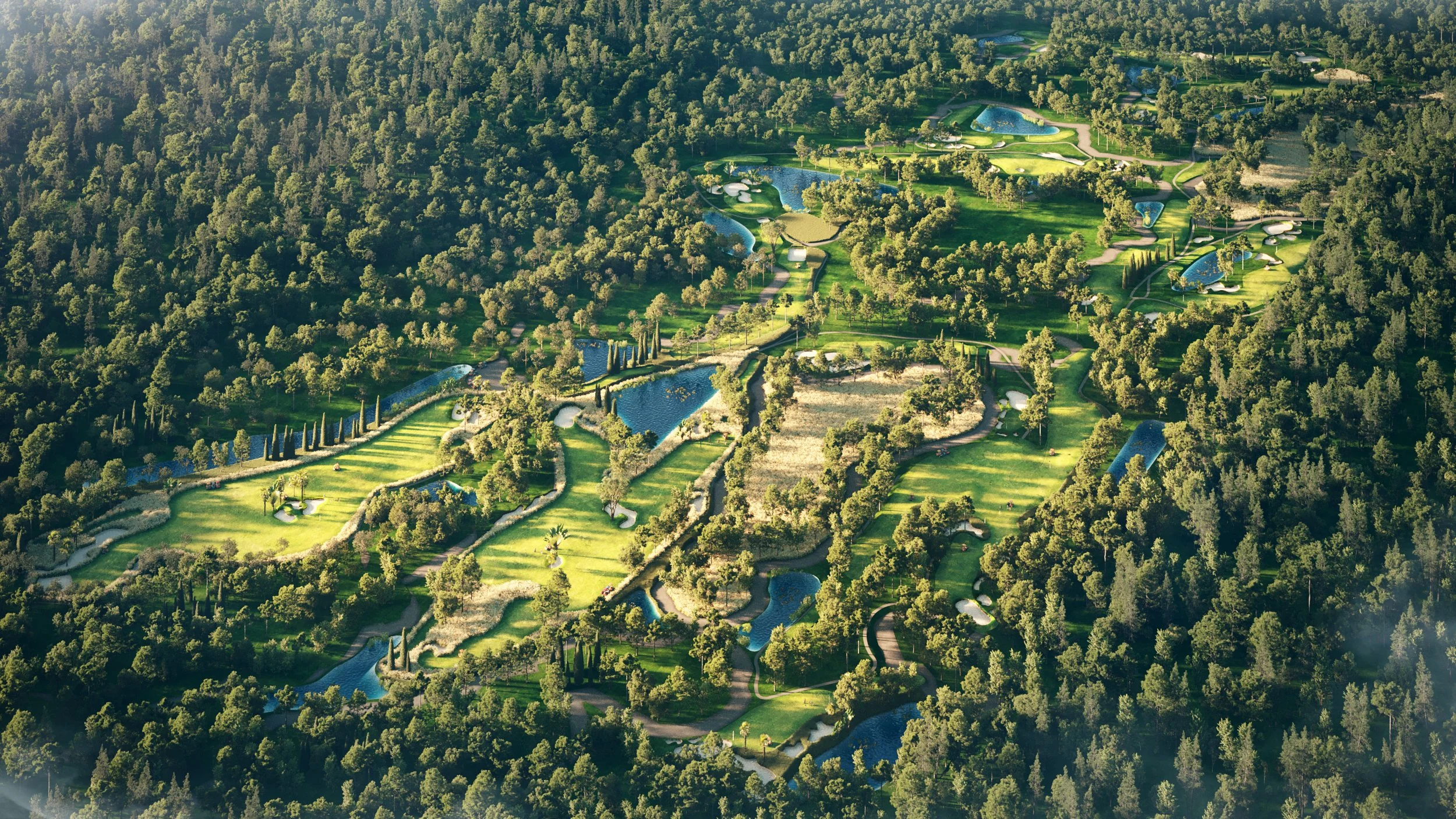
3D Rendering by Panoram CGI for St. Joe Company, Water Sound III Golf Course
The Power of CGI Visualization in Golf Course Design
-
Golf course design is as much about storytelling as it is about strategy. Architects have a vision in mind—perhaps a challenging links-style course hugging a rugged coastline or a lush parkland layout nestled within rolling hills. 3D visualization turns abstract ideas into tangible, immersive models that clients, investors, and stakeholders can see, explore, and understand.
-
Every golf course must work in harmony with the land. Thanks to Geographic Information System (GIS) data, LiDAR scanning, and topographical modeling, 3D visualization allows designers to create hyper-accurate representations of real-world landscapes. Slopes, water hazards, elevation changes, and vegetation are all mapped with precision, ensuring the course integrates seamlessly with its environment.
-
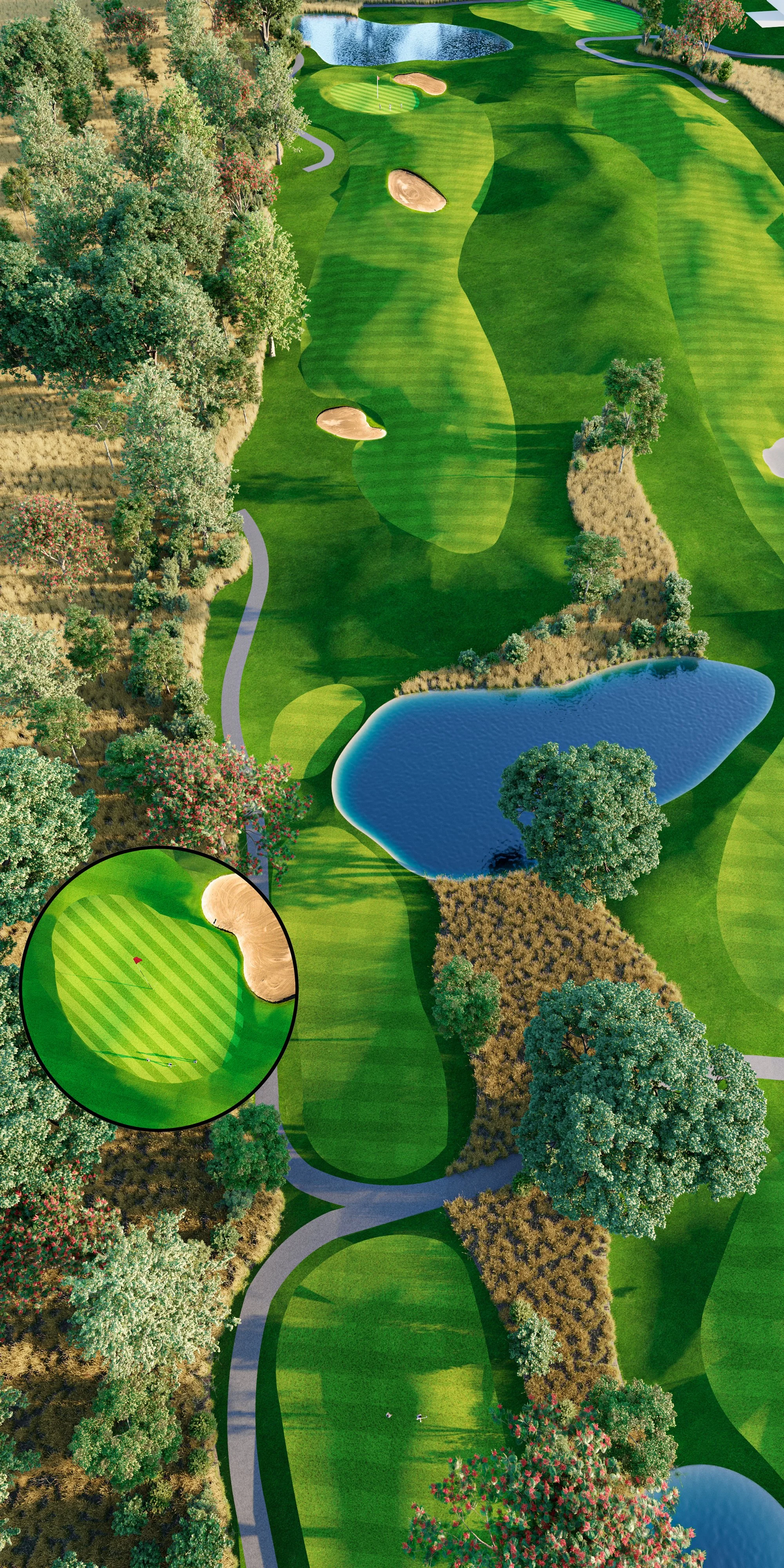
How will a par-4 hole play with a prevailing wind? Will a dogleg right create a risk-reward scenario for long hitters? 3D visualization allows designers to simulate different playing conditions, test tee placements, and analyze shot trajectories. This helps refine the course layout for optimal playability before a single bunker is excavated.
-
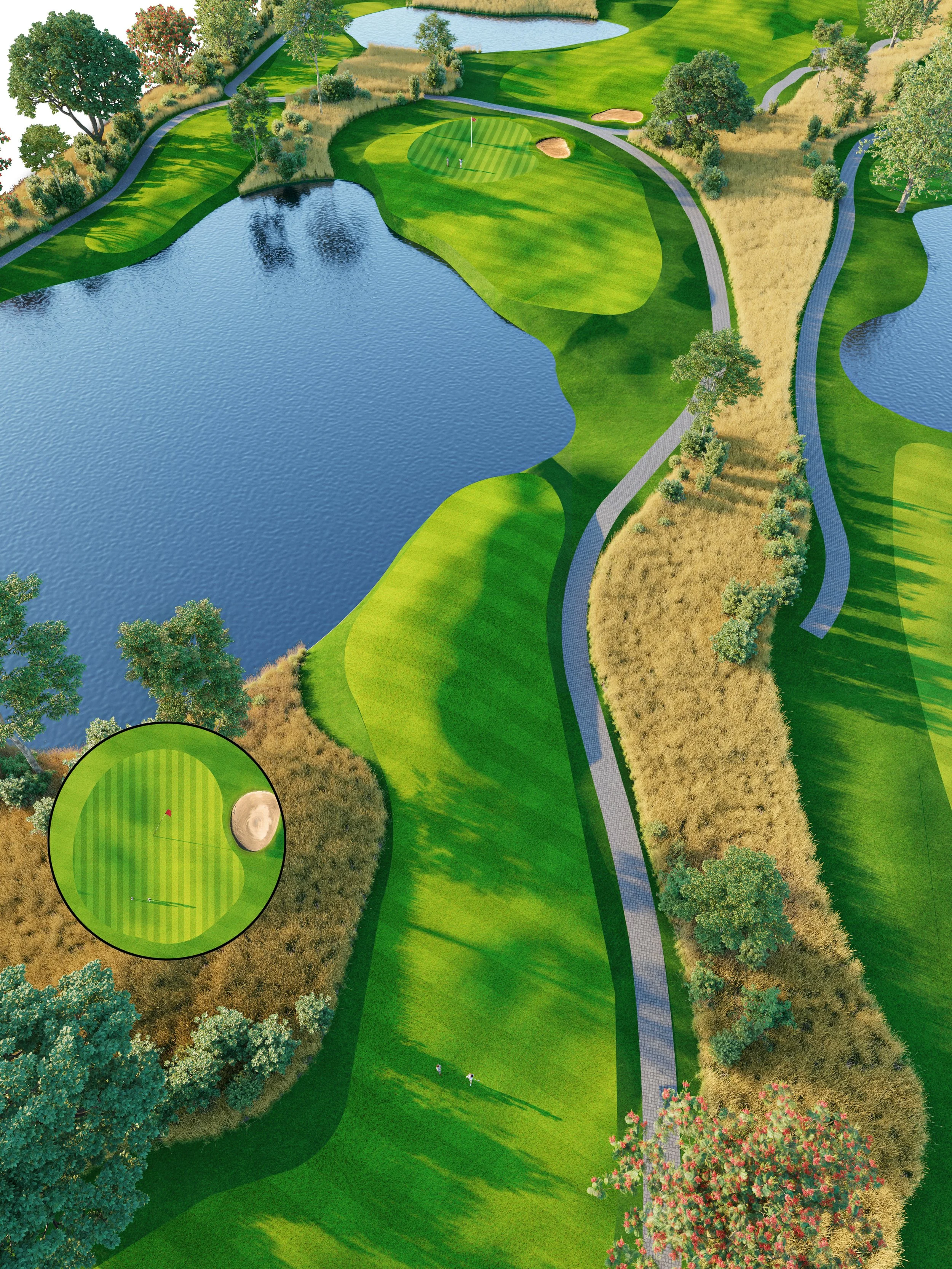
Static 2D plans can only convey so much. With 3D visualization, architects and developers can create interactive walkthroughs and dynamic flyovers that give stakeholders a true sense of scale, aesthetics, and ambiance. A well-rendered flyover video can showcase the beauty of a course at sunrise, the shimmer of a water hazard, or the undulating greens—all with cinematic realism.
-
Sustainability is a cornerstone of modern golf course architecture. 3D visualization allows designers to assess environmental impact, optimize irrigation systems, and plan for eco-friendly landscaping. With advanced modeling, architects can simulate water drainage, study soil erosion patterns, and ensure the course remains in harmony with nature.
-
Golf course development involves multiple parties—investors, course operators, engineers, and even government agencies. Clear communication is essential. 3D visualization eliminates misunderstandings by providing a common visual language that everyone can interpret. It streamlines approvals, reduces revisions, and ensures alignment among all decision-makers.
-
Before a golf course is built, it must be sold—whether to investors, members, or resort guests. High-quality 3D renderings and flyovers provide a compelling marketing tool, allowing developers to showcase the finished product before breaking ground. Golf resorts and real estate developments can use these visuals in promotional materials, websites, and presentations to generate interest and secure early commitments.

The Future of 3D Visualization in Golf Course Design
The golf industry is embracing technology like never before. With advancements in AI-driven design, real-time rendering, and even virtual reality (VR), the future of golf course visualization is only getting brighter. Soon, developers may be able to walk a course in VR before construction even begins, experiencing every bunker, fairway, and green in stunning detail.
Additionally, augmented reality (AR) may allow investors and designers to overlay course designs onto real-world landscapes, providing an even more immersive preview of future developments. Drone technology is also playing a role, enabling real-time data collection that feeds directly into 3D modeling software for unparalleled accuracy.
As technology continues to evolve, 3D visualization will remain an indispensable tool for golf course architects and developers—bridging the gap between concept and reality, vision and execution, design and playability.
Conclusion: Seeing is Believing
In golf course design, the ability to visualize a project before breaking ground is invaluable. 3D visualization isn’t just about creating beautiful images—it’s about improving accuracy, optimizing design, enhancing communication, and driving better decision-making. For architects and developers, investing in high-quality visualization isn’t just a luxury—it’s a game-changer.
If you’re ready to bring your next golf course project to life with cutting-edge 3D visualization, the fairway starts here. Panoram CGI offers 3D golf course rendering across the USA, helping you transform your designs into realistic, immersive experiences.
Request a quote or give us a call to discuss your golf project now!
Follow Panoram CGI on Google
Get our latest insights on architectural visualization,
real estate development and golf course visualization.
Follow Panoram CGI on Google
Get our latest insights on architectural visualization, real estate development and golf course visualization.