

3D Architectural Animation: How Cinematic Real Estate Films Sell the Experience Before It Exists
A well-produced architectural film does something different: it controls how that moment is discovered.
The camera can begin above a destination at sunrise, descend toward the property, move through the arrival experience, transition into the lobby, pause at a signature interior, and eventually reveal the view that defines the project.
None of those decisions are accidental.
For developers, architects, hospitality teams, builders, golf and country clubs, and real estate marketing teams, 3D architectural animation has evolved into much more than a walkthrough of an unbuilt property. At its best, it becomes a cinematic way to communicate architecture, atmosphere, lifestyle, and the larger story behind a development before construction is complete.
The difference is important.
A basic walkthrough shows spaces.
A cinematic real estate film gives those spaces a narrative.
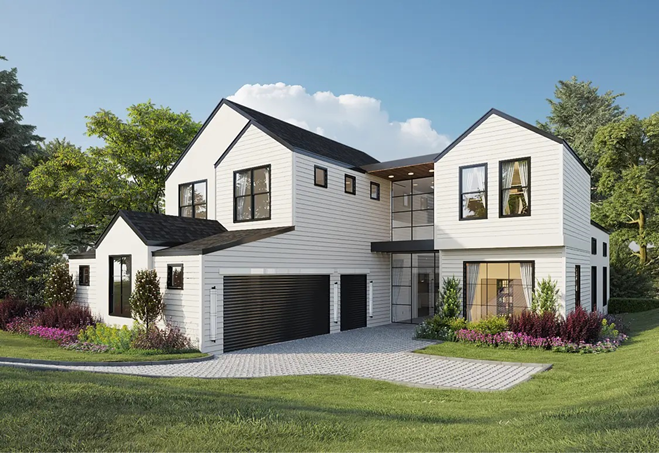
3D Animation Walkthrough
Why Movement Changes the Way We Understand Architecture
Architecture is experienced through sequence.
We approach a building. We enter it. Spaces compress and open. Light changes. Views appear and disappear. Interior rooms connect to terraces, gardens, pools, golf courses, streets, or skylines.
A single rendering can communicate one carefully composed moment extremely well. Animation adds another dimension: time.
That allows the viewer to understand how one space relates to the next and how the experience of a property unfolds.
For a luxury residence, the film might begin at the arrival court before moving through the entry and opening toward an ocean view.
For a resort, it might establish the destination from the air, introduce the architecture and landscape, transition through the lobby and amenities, and end with an evening dining scene.
For a master-planned development, an aerial sequence may help establish scale and context before the camera comes closer to individual buildings, amenities, public spaces, or residences.
The purpose is not to show every square foot.
It is to show the right moments in the right order.
A Walkthrough and a Cinematic Architectural Film Are Not the Same Thing
The terms are often used interchangeably, but there is an important distinction.
A 3D architectural walkthrough generally moves the viewer through a space so the layout, architecture, materials, or interior environment can be understood.
A flythrough animation may move above and around a building or larger development to communicate scale, massing, landscape, amenities and surrounding context.
A cinematic architectural film can combine both of those techniques but adds another layer: creative direction.
establishing shots
aerial approaches
carefully designed camera paths
close architectural details
changes in time of day
landscape movement
lifestyle moments
music and sound design
branded titles and messaging
cinematic pacing
a deliberate opening and closing sequence
The objective shifts from simply documenting the project to telling its story.
That distinction is especially important for luxury real estate and hospitality, where the project is often being marketed as an experience rather than only as a collection of rooms or buildings.
Start With the Story, Not the Camera
One of the most important decisions in an architectural animation happens before final rendering begins.
What should the audience understand or feel by the end of the film?
That answer should influence everything that follows.
A film created for an architectural presentation will be structured differently from one created for a luxury residential launch.
An investor presentation may need to establish the scale of the development, its relationship to the surrounding area and the major components of the project.
A hospitality film may emphasize arrival, atmosphere, amenities, landscape and guest experience.
A preconstruction residential campaign may focus on views, finishes, indoor-outdoor living, amenities and lifestyle.
A golf and country club may need to communicate the relationship between the clubhouse, golf course animation, landscape, member amenities and proposed improvements.
Before determining camera movements, we first need to understand the audience and the purpose of the film.
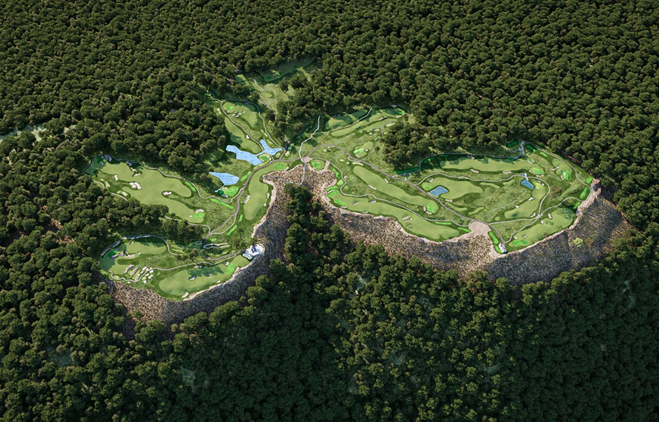
Golf Course Visualization with Aerial Precision
Storyboarding Gives the Film Structure
For more involved architectural movies, storyboarding is an important part of the process.
It allows the project team to determine the sequence before investing time in final animation and rendering.
A storyboard may establish:
1. the opening shot
2. the order in which major spaces are introduced
3. aerial versus ground-level sequences
4. interior and exterior transitions
5. key architectural details
6. title or messaging opportunities
7. the final hero moment
For example, there is little value in spending ten seconds moving down a corridor if that sequence does not contribute anything to the story.
Those seconds may be far more valuable revealing a dramatic arrival, pool deck, penthouse view, clubhouse terrace, golf hole or signature hospitality space.
Storyboarding helps make those decisions early.
Camera Movement Should Feel Intentional
One of the easiest ways to recognize an average architectural animation is the camera.
It moves because it can.
A cinematic camera moves because there is something worth revealing.
The difference may be subtle, but it changes the entire experience.
Slow movement can create anticipation. An aerial descent can establish context before introducing the architecture. A lateral movement may reveal depth across a facade. Moving from a darker interior toward a bright exterior view can create a natural transition between spaces.
Even a stationary shot can sometimes be more effective than constant camera movement.
The goal is not maximum motion.
It is controlled motion.
Camera speed, lens choice, height, direction, composition and duration should all support the architecture rather than compete with it.
Lighting and Atmosphere Carry the Emotion
Luxury real estate is not marketed only through dimensions and finishes.
It is marketed through experience.
Morning light across a terrace communicates something different from the same space at dusk. A hotel lobby illuminated in the evening creates a different impression from a bright daytime presentation. Landscaping moving subtly in the wind, reflections on water, warm interior light and activity in the background can all contribute to the character of a scene.
These elements should not be added randomly simply to make an animation feel busy.
They should reinforce the identity of the project.
For a refined coastal residence, the visual language may be bright, quiet and understated.
For an urban hospitality property, the film may feel more energetic and social.
For a private golf and country club, the atmosphere may communicate landscape, recreation, membership and a sense of place.
Cinematic visualization allows those differences to be expressed before the physical environment exists.
Where Architectural Animation Creates the Most Commercial Value
3D architectural animation can serve several purposes throughout the commercialization of a project.
Preconstruction Real Estate Marketing
When a property cannot yet be photographed, CGI animation can become one of the central visual assets of the campaign.
The film can introduce the architecture, amenities, interiors, landscape and lifestyle in one coordinated presentation.
It can be used across:
project websites
sales galleries
presentations
launch events
digital advertising
email campaigns
broker presentations
social media
public relations
listing platforms where video is supported
The same visual language can also be coordinated with still renderings so the campaign feels like one brand rather than a collection of unrelated assets.
Developer and Investor Presentations
Large developments can be difficult to understand from a master plan alone.
An aerial animation can establish the site and surrounding context before transitioning into individual buildings, amenities, public spaces or important development components.
This does not replace financial, planning or technical information.
It gives that information a visual framework.
Luxury Residential Sales
For an unbuilt luxury home, the buyer is often purchasing an experience that does not yet physically exist.
A cinematic property film can guide the viewer through the arrival, main living spaces, kitchen, primary suite, outdoor areas, pool, landscape and views.
The strongest film does not attempt to document every room equally.
It identifies the moments that define the residence.
Hospitality and Resort Marketing
Hospitality is inherently experiential.
A hotel or resort is not simply its architecture. It is the sequence of arrival, lobby, guestrooms, restaurants, pools, wellness spaces, landscape and destination.
Animation is particularly well suited to connecting those moments into a larger story.
Golf and Country Club Projects
Golf-course and club projects operate at a scale where movement can be extremely useful.
A film may transition from a course-wide aerial to individual holes, the clubhouse, practice facilities, landscape, member amenities or surrounding real estate.
For renovation projects, it can also be combined with other visualization formats to help leadership and members understand what is proposed.
One Film Can Produce More Than One Marketing Asset
A cinematic architectural movie does not need to exist only as one long video.
Planning the production correctly can allow selected sequences to be adapted for different channels.
A primary film might be produced for a project website or sales presentation, while shorter edits can be created for:
Instagram Reels
LinkedIn
digital advertisements
email campaigns
presentation openers
website hero sections
event displays
Vertical and horizontal formats should be considered during production rather than treated as an afterthought whenever those outputs are part of the marketing plan.
Branding can also be integrated through logos, typography, titles, location information, amenity callouts or selected project messaging.
The animation then becomes part of a broader content system rather than an isolated deliverable.
What Information Is Needed to Create a 3D Architectural Animation?
The quality of the final film depends heavily on the information available.
Depending on the project, the visualization team may review:
architectural plans, elevations and sections
CAD or BIM files
existing 3D models
interior design documentation
finish and material references
landscape plans
survey and topographic information
site photography or drone imagery
surrounding development context
branding and marketing direction
music or mood references
previously approved renderings
The level of design development matters.
Animation can begin from conceptual information, but the film should accurately reflect the level of certainty in the source material. A conceptual scene should not be presented as though every material and detail has already been finalized.
How Panoram CGI Develops an Architectural Film
Every project is different, but a cinematic animation generally benefits from a structured process.
1. Define the Objective
We establish the audience, intended use, project stage, desired length and primary communication goal.
2. Review the Design Information
The team reviews the available drawings, models, materials, landscape information and references to understand what is sufficiently developed for visualization.
3. Establish the Story and Sequence
For projects that require a more developed narrative, we map the major shots, transitions and pacing through a storyboard or shot sequence.
4. Develop the 3D Environment
Architecture, interiors, landscape, materials, lighting and surrounding context are coordinated according to the available design information.
5. Review Camera Paths Before Final Rendering
Camera movement and sequence should be reviewed before expensive final rendering begins. This is the stage to adjust pacing, viewpoints and the overall flow of the film.
6. Develop the Final Cinematic Look
Once the direction is approved, materials, lighting, atmosphere, entourage and other visual details are refined.
7. Post-Production
Depending on the project, post-production may include editing, transitions, music, sound, titles, logos, graphic overlays and other branded content.
8. Prepare the Final Deliverables
The completed film is delivered in the formats defined for the campaign, presentation or platform.
Not Every Project Needs a Two-Minute Film
More animation is not automatically better.
Sometimes a focused 20- or 30-second film built around a few strong moments can be more effective than a long walkthrough attempting to show everything.
Other projects genuinely need a longer narrative because the development includes multiple buildings, amenities, interior spaces, landscape areas or destination components.
The correct length depends on the story and where the film will be used.
Before determining runtime, ask:
What are the moments someone needs to remember after watching this?
That usually leads to a better film than asking how many rooms can fit into sixty seconds.
Architectural Animation Should Do More Than Move Through a Model
The technology behind 3D architectural rendering services continues to improve, but technology alone does not create a memorable film.
The quality of the model matters.
The materials matter.
The lighting matters.
But so do restraint, composition, rhythm, storytelling and an understanding of what makes the architecture worth seeing.
At Panoram CGI, our approach to 3D architectural animation is centered on that combination: architectural understanding supported by cinematic visual storytelling.
Whether the project is a luxury residence, hospitality destination, commercial development, master-planned community, golf course or private club, the goal is not simply to move a camera through an unbuilt space.
It is to create a film that gives the audience a reason to care about what comes next.
Frequently Asked Questions
-
A 3D architectural animation is a computer-generated film created from architectural and design information. It can move through interiors, around exterior spaces or above a larger development to communicate architecture, scale, materials, landscape, atmosphere and spatial sequence before construction is complete.
-
A walkthrough generally presents a project from a human-scale viewpoint, often moving through interior or exterior spaces. A flythrough typically uses elevated or aerial camera movement to communicate buildings, landscape, amenities or a larger development. A cinematic architectural film may combine both.
-
Yes. Architectural animations are frequently developed for project websites, preconstruction campaigns, sales presentations, launch events, social media, broker presentations and other real estate marketing applications.
-
Yes. Coordinating still renderings and animation within the same visualization approach can help maintain consistency across architecture, materials, landscape, lighting and the overall visual language of a campaign.
-
There is no single ideal runtime. A short social or website film may require only a focused sequence, while a larger development or hospitality presentation may require more time. The appropriate length depends on the audience, platform, number of spaces and story being communicated.
-
Typical project information may include plans, elevations, sections, CAD or BIM files, existing 3D models, material references, interior design documentation, landscape information, site photography and creative direction. The exact requirements depend on the project and its stage of development.
Planning an architectural film for an upcoming project? Schedule a consultation with Panoram CGI to discuss the audience, story, available design information, intended platforms and the visual sequence that will best support the project.
Follow Panoram CGI on Google
Get our latest insights on architectural visualization,
real estate development and golf course visualization.
Follow Panoram CGI on Google
Get our latest insights on architectural visualization, real estate development and golf course visualization.